Friday, 17 January 2014

Quality Coaching - what does it look like?

reflections on effective coaching...
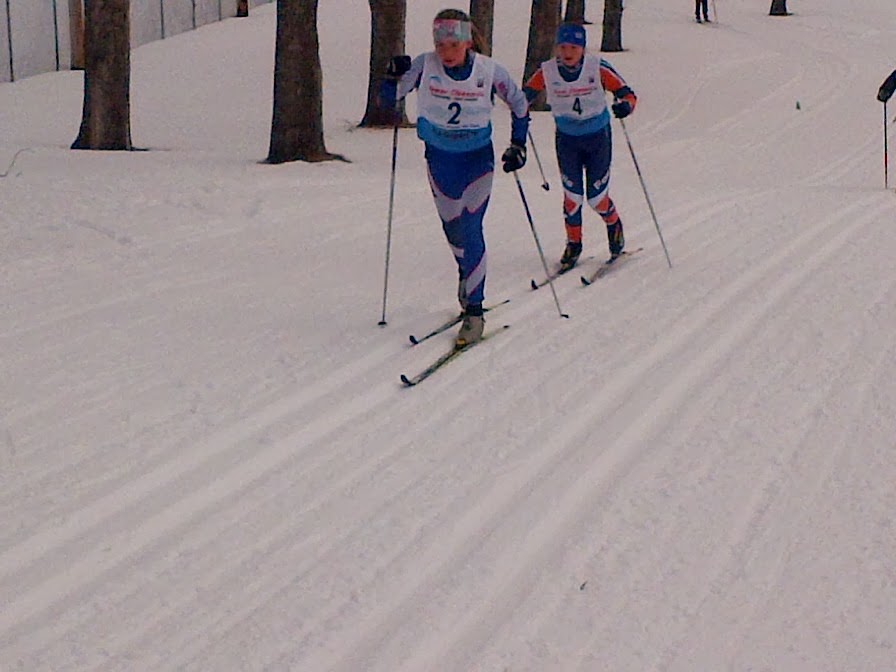


So much of the reading I am doing recently has focused on indicators of effective teaching.  As I read, my mind drifts naturally to thinking about how does this relate to coaching adolescent cross country skiers.  The parallels in ideas are striking.  Quality teaching and coaching definitely has some indicators.  The key to quality coaching is not whether a coach is seen to be 'excellent' by colleagues, but  rather, whether they are 'excellent' as seen by athletes.

According to Hattie in Visible Learning, quality teaching it seems can be enhanced by a teacher's verbal ability and interpersonal skills.  Coaches who can express their ideas articulately in language understood by athletes, and who can build relationships seem to be seen as better coaches by kids. But being a great coach of adolescents is a bit bigger than that.  Some of Hattie's other research findings would indicate that there are a number of other characteristics of coaches (teachers) that also are highly correlated with effective coaching.  These include:

- having high expectations - encouraging your athletes to place a high value on being a skilled and fit cross country ski racer

- teaching the language, the love, and the details of a sport - helping young athletes construct understandings of the technical, mental, and physical aspects of our sport

- monitoring and evaluating - getting kids to think about the nature and quality of their skiing - giving regular and effective feedback

- coaches who challenge athletes - encouraging kids to think through and problem solve

- coaches having a deep understanding of their coaching and its effect on athlete learning - thinking about how are go about interacting, teaching, assessing, and communicating

- having a high level of passion - loving what you do as a coach

- being adept at improvisation - being able to react to the immediate learning need of each athlete

- having respect for athletes - being respectful in voice tone, language, and appropriate personal boundaries

- having a positive practice culture/climate that fosters learning - adolescents can tell when the focus is on learning and improving

These aren't my ideas.  They come from John Hattie's book Visible Learning.  They are however my reflections on how his research based ideas relate to coaching adolescent cross country skiers.  When I read this stuff, I kind of go, ya, there are no big revelations in there.  But improving your practice as a coach, and striving for quality coaching asks us as coaches to reflect on what we're doing and extend the work we do in new ways.  That my friend, is the real value of these ideas about quality coaching.  Its work I try to do every day when I work with kids.  Try something new.  Push my envelope of skill a little more by taking an idea and changing how I interact with the kids I coach.  It is the only way to improve.  To try new things, to find areas of the work you do to improve. 

I know alot of teachers and coaches.  My experience is that those teachers and coaches who are most masterful at their work are folks who have made very deliberate attempts at improving aspects of their coaching or teaching.  They do this by reading, by talking with colleagues, by trying new strategies and methods. 

The fact is that Hattie's research would show that 'content' knowledge is not the biggest predictor of quality teaching.  The items listed above have a much stronger research based correlation to quality teaching. 

So you don't have to have competed in the Olympics to be an excellent coach.   Its not that olympic athletes can't be excellent coaches because in fact many olympic athletes go on to be highly successful coaches.  But research would show us that there are many other more important indicators of quality coaching than personal experience.  Most of those don't require initial expert content knowledge.

So...go for it.  My best pal in the world sent me a message the other day that read:

If you do not go after what you want, you will never have it.

If you do not ask, the answer will always be no.

If you do not step forward, you will always be in the same place.

That is one of the great benefits of best friends - they help nudge you along to become something better.  Thanks to my pal, Vince for doing that for me.

Monday, 13 January 2014

How to get the most out of your kids...some ideas borrowed from Teaching

Lets borrow what we know works well...
One of the most referred pieces of research literature right now in the school division I work for comes from a researcher in New Zealand named John Hattie.  Hattie's book, Visible Learning, is essentially a meta-analysis of meta-analysis studies.  That might sound kind of boring, but in fact, research like this would have been so valuable to me as a beginning teacher and coach many years ago.  What Hattie's work does is quantify things that teachers do and their affect on acheivement.  We all know anecdotally that there are great coaches (and teachers) and others that aren't quite there yet.  What Visible Learning does is quantify the effects of teaching and learning influences on achievement.

We all want the kids we work with to achieve, to learn, to be successful.  Why else would you put the effort into coaching if it wasnt because you had some specific outcomes in mind.  In the coach training work I lead in southern Alberta, fun is often articulated as a major outcome in children's ski instructional experiences.  The fact is that kids have more fun when they have success, when they achieve goals they set for themselves, when they learn a new set of skills.  As coaches we can learn something from strategies that successful teachers employ.  You can identify these coaches and teachers because the kids they work with are engaged, acquire skills, and enjoy themselves.  What is it that these coaches of children are doing?  Hattie's research can help articulate some of those strategies.  Here are a few gems from some reading I did this morning from Visible Learning.

Attributes of Coaches (Hattie refers to Teachers, but I think subsituting 'Coaches' is appropriate as both coaches and teachers are focused on learning and acheivement) that have the greatest influence on well managed classrooms/practices (the higher the d= value the more significant the effect):

- with-it-ness - d=1.42 - this is a coach's ability to identify and quickly act on potential problems - looks like 'hey I see you doing that, and that needs to stop"
- appropriate mental set - d=1.29 - this is the coach's ability to remain calm and in control  - looks like never getting flustered or raising your voice
- verbal and physical behaviour of coaches - d=1.00 - this the behaviour of a coach to indicate disapproval of off task behaviour - looks like 'the look' or a one word intervention such as 'enough'
- disciplinary interventions - d=.91 - this is the coach's ability to use an appropriate intervention to get kids back on track - looks like 'hey, take a break here and cool your jets - i'll talk to you in a moment'
- group contingency strategies - d=.98 - these are strategies that require a specific set of kids to reach a certain criteria level of approp behaviour - looks like 'hey kids, show me 5 minutes of focused effort, then we can play a game'

- tangible recognition - d=.82 - students being provided some symbol or token for appropriate behaviour - looks like - 'kids who show the most focus on task, get to pick the teams for our relay'
- direct or concrete consequence - d=.57 - looks like 'if you interupt me, you're on the bench for 5 minutes'
- coach/athlete (teacher/student) relations - d=.87 - positive relationship are powerful moderators on managing behaviours or off task activity - coaches who build positive relationships with kids have fewer behaviour problems/off task focus
- rules and procedures - d=.76 - stated expectations regarding behaviours and well articulated rules that were negotated with athletes have thei highest impact. - looks like 'hey kids lets talk about what is going to be normal for our team this year'

There is lots to learn and to try when you are leading a group of kids.  According to the research one of the most powerful things we can do is pay attention and intervene early (having some with-it-ness). We need to stay calm when redirecting kids and we need to have a few tools in our belt. 
The biggest and most important to me over the years I have been coaching and teaching has been building positive relationships.

Appropriate coach/athlete or teacher/student relationships go a far way - when kids care about what your reaction is to something they might do, it has a huge influence on whether they do it or not.  When you've got a positive culture and great relationships few behaviour problems or off task behaviour occurs.  We've all know coaches and teachers who have this skill.  This skill comes from deliberate and thoughtful leadership.  I encourage you be that kind of leader.

cheers
Roy Strum
Canmore

Wednesday, 8 January 2014

Early Specialization...reflections on where we're at

How early is too early?


In Canada, ski clubs are asked to adopt the Long Term Athlete Development Plan (LTAD)http://www.canadiansportforlife.ca/learn-about-canadian-sport-life/ltad-stages 
This document was created by sport scientists and experts in the field of kinesiology, physical education, coaching, physiology, biomechanics among others.  LTAD was introduced over 10 years ago in Canada to the cross country ski community. Clubs have responded by using the language and recommendations to design yearly training and racing programs.  This has had far reaching effects.
 
The conversation is at different places with different sports.  I came across an article on Sport IQ, a blog I follow.  The conversation focused on early specialization in ice hockey.  Hockey Canada is the national sport organization and has a section of their website devoted to long term athlete development - http://www.hockeycanada.ca/en-ca/Hockey-Programs/Coaching/LTPD.aspx 
 
In Canada, hockey dominates the sport culture.  In a city the size of Calgary there might be over 100,000 children playing organized hockey.  There are schools and specialized programs aimed at hockey players such National Sport Development or The Edge private school.  There are year round training opportunities, leagues, and camp programs for developing hockey players.  Children attend tryouts at 6 or 7 years old and are tiered into ability groupings.  Its big business and taken quite seriously.  Lots of good work happens in hockey.  Kids develop a passion for the game.  Kids develop technical and social skills.  Kids have fun.  I certainly am no expert on hockey player development but I do get sense from talking with parents of hockey kids that there is no shortage of opportunities for children of all ages to play hockey every month of the year in the greater Calgary area. 
 
The Sport IQ blog post I came across provides a good perspective on the pitfalls of early specialization.  In Canada, where passion for hockey resides like almost no other place, it is I think quite easy for alot of parents to get caught up in the 'my kid is the next Sidney Crosby' kind of thinking.  That type of thinking can encourage parents to do too much too soon.  I encourage you to read the article titled 'Early Specialization and Year round training are destroying youth hockey' http://www.getsportiq.com/2013/11/early-specialization-and-year-round-training-is-destroying-youth-hockey/   The ideas there are just as relevant to the cross country ski perspective. 
 
Its nice to come across something that aligns with your own set of priorities.  Its nice to see the conversation happening in other sports.  Bravo to Hockey Canada and to the hockey community for tackling this important athlete development issue.
 
cheers
Roy
Canmore

Wednesday, 1 January 2014

Measuring Growth of Adolescents - what does it tell us?


For the past several years, we've been recording growth data for our adolescent cross country skiers in our club.  This is recommended practice for clubs in Canada.  The data gathered is interesting and diverse.  It really happens - each child has their very own unique growth curve.  Some adolescents are early, some are later, and a lot of somewhere in the middle of the normative data.  Its good information.  The challenge is not in the gathering of the data but in what to do with it.

How can growth data influence athlete development plans.  There is certainly lots of information out there about measurement protocols and interpreting the findings to indicate readiness for windows of trainability.  There is a lot less information easily available for coaches about how to individualize training plans for kids experiencing peak height velocity (PHV) or pre PHV.  I've been thinking about this for awhile because I recognize there are lots of variables at play.  Group size, social groupings, coaching expertise, family variables, club culture, yearly planning, structural realities, among others.

What can we do with growth data - here are some of my reflections

- share it with kids - probably one of the most useful and easy action items - kids are interested in how they are growing relative to peers; they are interested in understanding how their bodies grow and how that affects what they are ready for.  I do a weekly strength session with the 12-13 year olds I coach, and the boys in particular have natural interest in moving beyond body weight exercises to doing what the high school age athletes are doing.  I have found that when kids can see some data about limb length relative to standing height they understand in a different way how their bodies aren't ready to do that kind of work.

- post it in the team room - it creates some awareness for parents and kids that as a club we are paying attention to some details about their children and their readiness for various types of physical training.

- differentiate physical training - according to the literature, this is the ultimate reason for recording growth information.  It is also really difficult to do when chronological age directs so many other variables in our sport.  I have tried a few strategies to differentiate instruction and I'll admit, not with the regularity or accuracy that data seems to imply.  The question that I ask myself when deciding on what best to focus on in training sessions is 'where can I get the biggest return on investment?'  I have found that for example, although flexibility or technical instruction is identified as a window of trainability for pre peak height velocity athletes, athletes experiencing PHV can benefit as well from flexibility or technical instruction.  Differentiating focus based on developmental characteristics is important, but of more importance in my mind are a number of other variables including some of the following:  team culture - kids improve because they want to and they improve more in positive, fun environments where they are challenged and recognized; quality instruction - kids improve because they have good models, coaches use the right tools and sequence skill development based on individual variables.

So, is it worth it to gather growth data every quarter on your 11-17 year olds skiers?  Ya, I'd say so - but it is important to note that having appropriate expectations of what you will do with the information is important in sustaining the effort of data collection over time.

Roy Strum
Canmore, AB 


Monday, 16 December 2013

Changing the Face of Ski Racing for Children


I facilitate lots of coaching workshops for coaches with all levels of experience.  For me, its such a rich learning environment.  The folks who take part in my workshops bring broad and varied experiences and perspectives - sometimes former national team athletes or coaches and sometimes parents who are just learning to ski themselves.  As part of the NCCP Community Coach training, we are asked to discuss, reflect, and think about introducing kids to competition.  What's surprising to me really, given the varied background of coaches in my workshops, is the almost universal support for competition in some form.

One of things we get talking about is 'what should competition look like for children'.  Invariably, someone brings up the very good point that ski competitions don't have enough in them to engage alot of kids.  Why is it that track meets or swim meets or gymnastics meets or speedskating meets for children can include multiple opportunities and disciplines for children to compete in a day but cross country ski races only include one 3-5 minute event for kids in a day?  The discussion around the table is robust and refreshing.

Why is it that children's events include only one event?  Workshops participants come up with lots of ideas to address this question - kids events are often an after thought for race organizers - the really important races are the ones for the juniors and U23 athletes.  Its too much work for volunteers... There isnt enough time in the day... Kids will be too tired to do more than one race... Coaches won't have enough time to prepare skis for multiple events...  Who will do the timing...  Why not just maintain the status quo...

Folks, I am big believer in the value of competition for children as a positive force in shaping identity and passion for being your best.  This starts with engaging children in ways that go beyond what we currently do for kids.  Come on folks, we can do better than ask parents to drive for 1 or 2 or more hours in a car with their children to compete in a 3-5 minute event.  Children are capable of doing more than one event. 

My vision for children's ski competition (we can all have our own visions) is to change the face of competition for children involved with cross country skiing.  To broaden the scope of what a ski competition looks like.  To do something bigger than a scaled down version of an adult race.  To broaden the base of participation in races by creating something where there are more opportunities for success and participation and self identification of children as ski racers. 

I remember listening to Istvan Balyi speak at the Coaches Association of Canada's Sport Leadership Conference in 2008 in Calgary.  Balyi is one of the architects of the Long Term Athlete Development Plan in Canada.  His message in this session was that when we dont have the luxury of large numbers of participants in a a sport, we need to be strategic about how and what we do with children's sport competitions.  Its not good enough to do a scaled down version of an adult race.

I am thrilled that in Southern Alberta this season, our clubs are engaging in a new event series that aims to change the way children experience a ski competition.  You can read some more about this series at http://builtforspeedeventseries.blogspot.ca/ 

Good luck with your efforts in creating engaging ski competitions for children this winter.  I would love to hear about some of the innovative ways your club or region are changing the shape of children's cross country ski competitions.

Roy Strum
Canmore, AB


Wednesday, 11 December 2013

2014 Alberta Youth Cross Country Ski Championships

Get Ready for some Super Fun Ski Action in Bragg Creek
Feb 28-Mar 2, 2014


Visit our Alberta Youth Championships website for a report about the 2014 event held in Canmore/Bragg Creek. http://albertayouthchamps.blogspot.ca/2014/04/2014-alberta-youth-championships-huge.html  

Here is the blog post originally posted in Dec 2013.
Roy

Every once in awhile, things come together in a magical way - where kids have fun, where adults have a great time, where kids get turned on to racing, where the weather cooperates, and everyone leaves with smiles on their faces.  Alberta youth Championships has been that kind of event for the past couple of years.  We've worked hard to build excitement and some tradition around the event - to brand it as the biggest provincial event for the four year age group of 2000-2003 in Alberta.  And its worked.  Thanks to the great work of coaches in clubs across Alberta, NWT and Saskatchewan in championing this event and the importance of it as a developmental tool, AYC really has grown to be the largest event of its kind in Alberta.  

What we envisioned for this event was that it would offer some unique qualities that werent available in any other ski race in Alberta.  An event where kids represented their clubs (much like the feeling at Nationals), where kids stayed at a camp, where food services were included, where coaches could mingle, chat and build relationships, where kids could experience a number of events where lots and lots of them received recognition for their efforts - we handed out 164 medals in the 2013 AYC and a club champion banner for the top performing club.  That combination has been a winning combination for this event and something that you wont find at any other ski event in Alberta.  We see this event growing over time - once the word gets out about a good thing, people like to share it.

Our early registration deadline, Dec 15 is fast approaching and what follows is a letter I have sent out to club contacts from across Alberta, Saskatchewan, and NWT.  We would love to see you at the 2014 AYC in Bragg Creek.  Please feel free to send this information around to anyone you like.

Roy Strum
Canmore, AB


Greetings club coaches from across Alberta, NWT and Sask,

the organizing committee for the 2014 Alberta Youth Championships are pleased to invite you to participate in the what is the largest provincial event for midget and minimidget age skiers in Alberta.  This event is open to all interested skiers born in 2000, 2001, 2002, 2003 from all clubs.  Please feel free to share out this communication with any and all ski club members and others who are not on this list.  Please also distribute this as you like to any and all of your club members who would have interest.  this event is cohosted by XC Bragg Creek Ski Club and Canmore Nordic Ski Club.  The event has had two very successful years in 2012 and 2013 and we anticipate another incredible weekend in Bragg Creek.

a quick reminder that the early registration deadline for the Alberta Youth Championships is December 15.  Afterwhich it will still be possible to register just at a higher cost.  We are really hoping to have folks register early so that we have a good idea of how many people will be in attendance as the camp we are staying at wants a rental deposit three months in advance of the event.

a few details that I have had some questions about

meals 
1.  special diets - most special diets can be accommodated by the camp chef.  If your child has a special diet, i would encourage you to contact the camp chef, Matthew Prosser at 403-686-6325 and ask him if he can accommodate the special diet that your child might need - Please go ahead and compile a list of special diets for your club and send them to roystrum@gmail.com by monday feb 24, 2014.
2. there will be a friday evening snack of fruit, a hot and cold breakfast on saturday and sunday morning, bag lunches on saturday and sunday, and a banquet on saturday evening.

transportation
1. transportation from your home community to and from Bragg Creek is your responsibility.
2. ground transportation during the event is the responsibility of each ski club to organize.  no ground transportation to and from the event site is organized by the event organizers.  this is similar to how transportation works at nationals.

events
1. there are a number of race events as part of the Alberta Youth Championships in Bragg Creek:
- an interval start skate race on saturday morning - year of birth boy and girl categories for each of 2000, 2001, 2002, 2003
- a 4 person skate relay (official and unofficial teams) on saturday afternoon - official teams are two boys, two girls, two minimidgets, two midgets all from the same ski club; unofficial teams are any combination
- a 3 person coach relay - from the same club
- wave start classic race on sunday morning - year of birth boy and girl categories for each of 2000, 2001, 2002, 2003

eligible athletes
- athletes must be born in 2000, 2001, 2002, 2003 to participate.  Athletes born in 2004 or 2005 or younger are not permitted to participate

accommodations
- clubs will be assigned bunkrooms in one of the lodges at Kamp Kiwanis located at intersection of highways 8&22, 12 km north of Bragg Creek.  the number of bunkrooms assigned will correspond with the number of kids registered from each club.
- showers are available for everyone.  some showers are located in ensuite bathrooms, others are located in bathrooms down the hall from bunkrooms or in neighbouring cabins.
- bunkrooms sleep between 4 and 14 people.
- number of adults at youth champs from each club.  Please plan to bring at least one male and one female adult from each club.  The ratio of adults to kids from your club should be about 1 adult for every 8 children.  e.g. if you have 32 kids from your club attending, please have 4 adults register as coaches/chaperones.  
- coaches and chaperones must register as well on zone 4.  the cost for chaperones does not increase on dec 15.  it remains the same until the event registration closing date on feb 23.  this way clubs can register the appropriate number of adults to match their child registration numbers from their club.
- bedding - every adult and child staying at Kamp Kiwanis must bring their own bedding, pillow, toiletries, towel.
- bunk beds are camp style, vinyl covered mattresses.
- we will not have room for extra adults and younger or older siblings - cochrane is the closest town (20km north) that has a number of hotels.

waxing information
- high flouro glide waxes are not permitted at the Alberta Youth Championships.  We believe that the focus of this event should be on good skiing and not on who has the expertise or ability to pay for expensive high flouro glide waxes.  We also think that simplifying waxing will give coaches more time to focus on the important work of helping young skiers have a positive experience with racing.
- an indoor wax space is available at kamp kiwanis - the hobby hut has plenty of plug ins and you can drive your vehicle up to the door.
- there is no electricity at the race site - west bragg creek ski trails - so if you plan to wax at west bragg, you need to bring your own generator.

race site information

- West Bragg Creek Ski Trails are the official trails for the 2014 Alberta Youth Championships.  These trails are located at the end of Township Road 232, 8km west of the hamlet of Bragg Creek.  The trails are north facing, hold snow very well, and are well maintained by both Kananaskis Country and a local volunteer group, the Greater Bragg Creek Trails Association (GBTCA).  GBTCA is our official race trail groomers - they do an excellent job preparing for this event - it is the biggest event of the year at West Bragg Trails.  West Bragg Trails are located at 1450m - a similar elevation to Canmore Nordic Centre and over 300m higher than downtown Calgary. The site recieves abundant snow and with the excellent grooming, the site is skiable on great trails 90% of the winter season.
- West Bragg Trails were designed and built in the early 1980s by the trail designer as other K Country trail systems.  They are narrow old school trails that are very hilly.  The Stairway to Heaven climb is well known by kids who have skied at west bragg in the past.

arrival and departure times

please plan to arrive around 6pm on friday evening.  we will move out of Kamp Kiwanis on Sunday morning before the race events.  Bags can be left on the deck to pick up after the sunday races or can be loaded into vehicles on sunday morning after breakfast.  Over the past couple of years we have been able to do sunday awards on site at west bragg and be driving home by 1pm.

awards

- medals to 10th place in each single year, single gender category
- medals to 3rd place in the official relay (only the fasted team from each club is eligible for medals)
- medals to 1st place in the unofficial relay
- hip hip hoorays for the winners of the coach relay
- club aggregate banner awarded on sunday - formula for determining aggregate champions found in race notice
- race notice is located at xcbraggcreek.ca  

registration 
- early registration - $125 - until Dec 15 - https://zone4.ca/register.asp?id=5602&lan=1&cartlevel=0  
- registration deadline - Feb 23, 9pm - $175
- coach and chaperone registration deadline- Feb 23, 9pm - $80
- please note there is one event price that includes accommodation, food services and events.  If you choose not to stay at Kamp kiwanis and join us for meals that is entirely your choice but there will be no reduced registration price if you choose not to stay on site.  We are purposely organizing a camp style event to promote relationship building amongst kids and coaches and clubs from across the province.  We would like every child who is participating in the events to stay on site at Kamp Kiwanis, but if you choose not to, there will not be a reduced fee for registration.

questions
Roy Strum, Chief of Event, 2014 AYC 

Wednesday, 4 December 2013

Putting Racing into Perspective - a critical skill for adolescents

what is really important to kids...


This past week I participated in a ski club exchange with kids from our club in Canmore and kids from Chelsea and Gatineau, QC.  It was a fantastic week - one of those experiences that will stick with kids - the right mix of adventure, fun, new experience, and community building.  Its something that 12 and 13 year olds in our club eagerly look forward to as they grow.  We've done a few of these exchanges with Chelsea as well Whitehorse.  Always incredible experiences. 

Usually as part of these experiences we throw in a race event as part of the exchange program.  This past weekend all of the Chelsea kids and Canmore kids raced in the season opening Alberta Cup races in Canmore.  As part of the lead up to the races we did a race prep session.  I led this session and am pretty pleased with how it turned out.  Pleased because I think most of the kids were engaged with the session.  Here is what I did:

I did a question response activity.  I put sticky notes and pens on each table, enough for every kid.  The sentences I asked kids to complete were:  Success is....    When I am doing my best effort, my body feels like...   Pride in my effort looks like...

I chose these questions purposefully.  First, I wanted kids to think about success in a broader scope than finish position. In a sport like cross country ski racing, you need to do this.  Only one person wins the gold medal, everyone else doesn't - certainly we can be a bit more creative about success than finish position.  Secondly I wanted kids to think about best effort and what their body signals and sensations would be telling them if they were doing their best effort.  Sometimes its our bodies that let us that we are really trying our best.  Thirdly, I wanted kids to know that someone was watching them and that what was going on in their heads shows on their face.  I created some expectations that I wanted them to do their best and that I wanted them to feel pride in their effort.  So what does pride look like when you wear it. 

The adolescents I worked with in this session were for the most part very engaged in answering these questions and came up with surprising and authentic responses.  Kids this age think about this stuff and sometimes, well ok, maybe always, need some help framing what a race is all about. What is success?  What does pride look like? these are important questions that help to frame a race for kids.

I share this out because I think its important to voice the power of our roles as coaches and the importance of reinventing the work you do with kids every year.  Great teachers and great coaches do that work - they reinvent their role, their processes, and their learning activities to meet the needs of each new group of kids they work with.  Its what I strive to do - reinvent myself regularly; keep myself current, and always find an edge to the work where I am using my skill set to help kids develop a love of being active, a love of cross country skiing, and a love of being an athlete.  I encourage you to find your own edge and to go for it!

Roy Strum
Canmore, AB

Monday, 25 November 2013

Teaching for Understanding...helping young skiers put skills into a context

rethinking how we are teaching skills


I just had a wonderful weekend in Edmonton.  Folks there had invited me to come up to work with a group of coaches on how to work with kids and to deliver a couple of NCCP coaching workshops.  Every time I do this sort of work I learn something new.  I try something different.  Although I plan out the details of the workshop I will lead, often, the input of participants leads me to a different place than where I had first thought I would go.  Thats what happenned this past weekend in Edmonton.  Here is the epiphany that followed.
 
So often when we teach skills to kids (or adults for that matter), we find a nice flat space to work with them, often this spaces has tracks and flat areas for skating. We work with them on diagonal striding without poles, or free skating.  I have done this alot - worked on basic technical points in isolation of terrain.  This weekend, as I was pulling together a little skills/error detection correction session, I thought about a body of literature that exists called Teaching Games for Understanding. http://www.tgfu.info   When I was undertaking a MSc Kinesiology at U of Calgary, I did some reading about this work as I was interested in advancing the effectiveness of coaching interactions on skill development in youth.  Games for Understanding focuses on the advancing instruction of sport by putting skill development in the context of the game.  Instead of just learning the forearm pass in volleyball in isolation in a drill, the forearm pass is taught in the context of tactics.  The big idea is that when a player understands where and when to use a forearm pass in a game, their readiness for learning is much greater.  The same idea applies well to cross country skiing.
 
Why is it that we teach free skating on a stretch of trail back and forth, watch it on video, look at joint angles, body position - all of the technical pieces.  Then during a race, particularly with adolescents, they don't perform the skill in the context of the terrain where is optimally performed. With the games for understanding approach, ski skills would be taught more explicitly within the context of the race or of the terrain in which it should be used.  This seems common sense, but its not what I have done most of over time.  When I have worked on weight shift and diagonal striding, I have typically done this on flat terrain or gently rolling terrain.  It worked for my purpose, I wanted to have athletes experience some success in getting a feeling for what gliding on one ski at a time felt like.  There is nothing wrong with doing this.  However, it does present an out of context learning situation for young learners when we teach them a skill like diagonal striding on flat ground which in the context of a race, we ask kids to mostly perform on a climb. I know what I emphasize is that diagonal striding is our climbing gear.  It makes me think, why is it that I didnt do most of my instruction on a climb when focusing on diagonal striding instead of flat ground.  Not many of the fastest skiers diagonal stride on flat ground.  They double pole on flat ground. 
 
Teaching kids a skill out of its context might make sense in some ways, however if we really want kids to learn that diagonal striding should be used primarily as a climbing technique, then that outcome should be visible and explicit.  We should practice diagonal striding technique on climbs because that is where we perform that skill.  Rocket science, no.  Common sense, yes.  But this is what the work of the games for understanding model tell us.  If you want to create skilled performers, put the skill in the context of the game.  In cross country skiing the game is a race.  Where and how and when do we want athletes to perform a skill.  I think that developing this understanding is a key piece of both enjoyment, skill development, and success as a young athlete.  Adolescents are ready for this type of work.  I encourage you to give it a try.
 
Roy
all-around nice guy
Canmore, AB

Wednesday, 20 November 2013

Coaching effectiveness - what do we know...

how can teaching and learning literature contribute to enhanced coaching effectiveness


I'm not sure if I am out of the loop, but over my years as a coach of adolescent cross country skiers, I have not come across a great deal of literature about what aspects of coaching contribute most to athlete learning and achievement.  If you can point me in that direction, I would appreciate it.  You see I have worked for a number of years in the education world.  In the Teaching world, professional learning networks are the norm - particularly on Twitter, which is probably the single most used and highly effective teacher professional development tool in existence.  I know that there are a ton of athletes who use twitter to update followers on their travels, but I have yet to find a network of connected cross country ski coaches who use twitter to share out their ideas, reflections, and best practices through their blogs or tweets.  If it exists, I sure would appreciate you connecting me to it.  Please message me @RoyStrum on Twitter if you want to connect as a ski coach in this manner.  I am game as I have professionally benefitted so much from my professional learning network in my world as a phys ed teacher.
 
The real aim of this blog post is to share out some reading I have been doing from an education researcher from New Zealand, John Hattie.  In my work in the Calgary Board of Education, Hattie is the latest rage - everyone is reading his work and applying his findings to their professional practice.  Why - because his work is based on a meta-analysis of thosands of education research studies on student achievement.  As I have been reading Hattie's book - Visible Learning - I have constantly been thinking about my work as a coach of adolescent cross country skiers and ways that I can apply Hatties ideas about advancing achievement to my work as a coach.
 
Hattie identifies teachers as a major influence on student achievement.  Not that all teachers are effective or are experts or have a powerful effect on students - but that some teachers undertaking certain acts with appropriately challenging curricula and who show students what the learning outcome is very clearly have a powerful effect.  Some of the major contributions that effective teachers have on student learning are:
  •  quality of teaching as perceived by the students - students can pick out the teachers who focus on cognitive engagement with the content and who help students develop a way of thinking and reasoning that fits for the context.  This is completely relevant to coaching - coaches who can enage athletes in thinking about skill acquisition and developing understandings that can be applied in the contexts of being a ski racer are more effective in helping young athletes become better skiers.
  • teacher expectations - having high expectations of athletes' success is a self fulfilling prophecy in much the same way as having low expectations of athletes' success.
  • teachers' conceptions of teaching, learning, assessment and students - this relates to coaches' views on whether all young athletes can progress and whether achievement is changeable or fixed and whether progress is understood and articulated by coaches.
  • teachers' openess - this relates to whether coaches are prepared to be surprised.
  • classroom climate- this refers to having a warm socio-emotional climate at practices where errors are not only tolerated but welcomed.
  • a focus on teacher clarity in articulating success criteria and achievements - this relates to the degree to which coaches identify success criteria in skill development and athlete development.
  • the fostering of effort - probably one of the single most important coaching influences - how much do you foster and champion effort instead of outcomes.  Who gets the recognition in your club, the kid who stands on the podium or every kid who demonstrates effort?
  • the engagement of all students - great coaches focus on all young athletes equally, regardless of initial ability.  Every adolescent cross country skier can improve with the right type of coaching interventions.
 
I get excited when I read stimulating books or listen to the stories of folks who have worked hard to achieve something worthwhile.  My practice as a coach is altered by this type of learning.  I would like to find more coaches interested in sharing their practice and their ideas.  You can follow me on Twitter at @RoyStrum - I look forward to connecting with you.
 
Roy Strum
Canmore, AB

Tuesday, 19 November 2013

Thoughts on risk and success


Ted Talks is an amazing phenomenon in our digital culture.  A place where people share their thoughts; often delivered by folks who've been at something a while and whose message has some resonating quality that in many cases shifts perspective.  I enjoy Ted Talks - tune in every now and then to listen, learn, reflect, and give myself the opportunity to see the world through another person's lens.  I recently tuned in to a couple of Ted Talks videos that I wanted to share out because they have particular relevance for working with youth and thinking about the risks and benefits in the choices we make.
 
Chandra Crawford's story is remarkable in its accessibility.  With Chandra, you get the feeling that anything is possible.  Her story includes the remarkable gift of using her success as a platform for inspiring girls and young women to have confidence in themselves and strive to be their personal best.  She embodies this work by embracing her role as a mentor, role model, and agent of positive change all the while striving for her own personal excellence.  We need more Chandra Crawford's in the world.  What Chandra models about success is that the most important piece is about the platform for influencing others in a positive way.  Her Tedx Canmore talk brings this message home.  Definitely worth the 12 minutes to watch on the link below.
 
 
Grant Statham is a mountaineer and guide.  He speaks to risk and the acceptance that some risk is worth taking because the outcomes outweigh the potential for negative consequence.  Some risks aren't worth the potential for harm or injury and so need to be avoided or minimized.  When we work with skiers we work with risk.  There are the inherent hazards associated with cross country skiing.  There are the other risks associated with introducing kids to competition. How do you balance risk with potential positive outcome?  Statham has some good ideas in his Tedx Canmore talk on the link below.
 
 
In my work with young skiers, I have come to see that there are many things that go into transitioning young skiers from 'i'm doing this cause my parents want me to do it' to 'i love this stuff'.  Some of that has to do with how risk is framed.  Is your club a space where finish position is championed? Is it ok for kids to be in a learning space and feel valued and recognized for their effort?  How is success framed in your club?  these are good questions.  I've my own ideas about these things. 
 
Creating success means framing the work i do with kids to reflect effort, skill improvement, and achieving both process and outcome goals.  Creating success means recognizing the power of relationship between the coach and the athlete.  The tone I set in my interactions with kids is something i think a great deal about.  Keeping things lighthearted, respecting boundaries, and ensuring I have an appropriate balance of personal interactions as well as focused reinforcement or teaching interactions are important to me.  I have been reading a book called 'Visible Learning' by John Hattie lately.  Hattie's work is in the meta-analysis of thousands of studies focused on teaching and learning influences on achievement.  One of the gems from yesterday's reading from Hattie's work is that the Teacher (or Coach) is the variable with largest d value or effect on achievement - in his work Teachers (the person) have a d=0.49, compared to Curricula where d=0.45 or the Teaching (what the teachers does to teach) which has a d=0.42. 
 
What we do as coaches to balance risk andn define success is important work.  I use my role as coach to be an influence of positive change, of growth, of skill development, or positive relationship, and of creating a positive culture.  I encourage you figure out what is important to you.  As Hattie points out, there are lots of things that work when it comes to learning, what we need to do as coaches of adolescent skiers is figure what what works better.
 
Roy
Canmore, AB
 

Monday, 28 October 2013

Optimizing the Positive Potential of Coach-Athlete Interactions

I love being a coach...


Coaching continues to be one of the great joys in my life.  Each one of us acts on our values, our ambition, our passion.  If you work hard, opportunity comes along and your hard work puts you in the place where you can jump off and do the things that actualize your passion.  Every person has their own starting place, their own story, their own unique pathway that has gotten them to where they are.  My own story isnt one that includes lots of opportunity as a child.  I knew from a young age that being an athlete was what I wanted to be.  My family was not a sports family and any and all opportunity I was presented with came from the public schools I attended.  I think its why I dreamed of becoming a phys ed teacher.  The idea of being an athlete was my own.  I owned it.  It came from my dreams.  It was a couple of high school phys ed teachers who vailidated my ambition that helped me actualize my vision.  It was the influence of some caring adults who helped me to change the way I thought about my potential and give me the courage to go for it.  Coaches play a huge role in the way young people see themselves and the possibilities that exist when you work for what you get.  No matter what you do or dont accomplish as an athlete, the way that you see the world can change in a positive way when you have a coach that helps you set your sights on some appropriate targets.

The more I read and the longer I am on this planet, the more that I realize that the important stuff is about working hard, about continuous learning, about seeing a picture of where you want to go and what you want to be.  Along the way its important to have friends - friendships that are recipricol in nature - ones where you give and receive equally.  I've recently rediscovered the joy of having a best friend and how having a deeper friendship with someone can change the way you see your world.    Carol Dweck, in her book Mindset, points out that friends can give each other wisdom and courage to make growth enhancing choices. For me part of the learning is reading - reading material that gets me thinking - that stretches my perception of what I can do and fuels me with ideas of how to get there.  One of these books has been Mindset by Carol Dweck.  In it Dweck speaks to the role of coaches, teachers, parents in helping create the type of thinking framework that helps people become their best. Isnt this really what coaching is all about?  helping kids become their best.  For me, its certainly why I coach. But why blog about it?  Who cares really about what one dude thinks.  I blog as a way of processing my learning - there are alot of great ideas in a book like Mindset - for me blogging is about synthesizing ideas into manageable bites.   Here is some more of the takeaway from this book.

What we say to the kids we coach matters

Delivering the message that 'success is about hard work' is something that is important to me.  When we give that message to kids it says - if I work hard, if I am persistent, if I focus on learning I will improve.  Its important for kids to own their effort and to see the link between success and hard work.  No successful champion of anything worthwhile has acheived something just on natural talent.  What is particularly astounding is someone like a Marit Bjoergen, World and Olympic cross country ski champion who continues to be at the top of her game for 8-10 years.  How is this possible - not natural ability alone - but a willingness to work as hard as she can to do everything in her power to be the best that she can be.  A sport like cross country ski racing I think has hard work built into it and its perhaps why as a sport it appeals to those with a growth mindset - someone who says to themselves 'I am going to work hard to be my best'.

How we praise kids matters

Focusing on the effort and choices is something Dweck says is critical to helping kids grow because it focuses on the piece that kids can control.  No one can control natural abilities - so focusing on it sends the message that 'you were born this way, destined for greatness'.  Praising talent or the outcome can set kids up when they hit a snag and don't win and their confidence goes out the window and their motivation hits rock bottom.  How many times have we seen this with young skiers in cross country skiing where early success kids drop out as soon the late developers catch up.  For me, its important to give these early developers the right mindset that focuses not on talent or outcome but instead on effort.  We lose too many early developers from our sport and its almost accepted as normal and expected - early development in cross country skiing can almost be seen as a curse because the pattern seeems to be 'win early on talent and size, then drop out later when the going gets tough'.  Its important that we don't give a message that leads kids to think to themselves 'I won because I have talent. Therefore I will keep winning'. We can't afford to do this in our sport. It just isnt big enough in Canada to be so reckless with young people.   Instead, we need to focus our work on developing a culture of hard work, effort, and perseverance.

How we help kids deal with disappoinment matters

Lets face it, as an individual race type sport, most kids who try out racing never get on the podium.  What we say to these kids can help them develop the tools for success later on.  As coaches, do we champion the champions or do we focus on developing a culture of 'hard work leads to success'. 

Dweck offers a few great ideas of things to say to kids experiencing disappointment

- I like the effort you put in, but lets work together and figure out what you didnt understand

- We all have different learning curves - it may take some more time for you to catch on to this, but if you keep at it, you will improve

- Skills and achievement come through effort and commitment

We live in a world now where so many parents bubble wrap their children - avoiding sports and situations where their children might experience set back or disappointment.  Here is a great response Dweck shares in Mindset of a parent helping his daughter deal with a competition result she was disappointed with.

"I know how you feel.  It is so disappointing to have your hopes up and to perform your best but not to win.  But you know, you havent really earned it yet.  There are many girls here who have been at it longer and who have worked harder than you.  If its something you want, then it is something you will have to really work for".

so...

I love being a coach.  It provides an opportunity everyday to shape the future of young people.  It provides me with chances to show concern, be compassionate and have consideration for others.  You never know what kind of influence you might have on a young person through helping them be their best.  I like to keep it fun but focus on the bigger ideas - the learning that comes from deliberate and thoughtful interactions that promote growth.

Its already winter in our part of the world.  Time to strap on my skis and enjoy the incredible feeling that is cross country skiing.

Roy Strum
Canmore, AB

Wednesday, 23 October 2013

What the Growth Mindset can teach us...

reflecting on talent and hardwork


Carol Dweck is the author of Mindset, the New Psychology of Success - How we can learn to fulfill our potential.  Dweck makes the case in her book that there are two mindsets - a growth mindset and a fixed mindset.  A fixed mindset is one where an athlete sees their limits as fixed - you are either destined for greatness or not.  You either have the talent or you don't.  A growth mindset is one where an athlete says to themselves 'I can learn this, I can get better with practice and hard work'.  Dweck points out that most highly successful athletes have a growth mindset - one that allows them to respond to setbacks with the perspective of 'how can I improve'.  In our work with young skiers, how can we create a space where a growth mindset is encouraged and supported.
 
 
Talent is a word that comes up often in sport, especially when a group of coaches get together.  'Oh, that kid has lots of natural talent' is a phrase you might hear.  Talent is sometimes associated with physical endowment - large muscular kids, or kids who ski effortlessly and technically better as an 8 year than most adults.  The problem with 'talent' is that it doesn't naturally encourage hard work.  We see this all the time - 150lb 13 yearold boys who win races by 5 minutes only to drop out of skiing when the later developers catch up in their development.  Dweck points this out nicely- "the naturals, carried away with their greatness, don't learn how to work hard or how to cope with setbacks".  Focusing on talent, creates a fixed mindset - one that says - you were born with 'greatness'.  It is almost a curse to be identified early as 'talented' as most highly successfull athletes weren't necessarily blessed with lots of early natural ability - they became great because they worked hard. Michael Jordan, Bruce Jenner, Jackie Joyner Kersee, Billy Jean King, Babe Ruth - all athletes who didnt start out as the ones identified with lots of talent.  Champions it seems find success in doing their best, in learning and improving.
 
'You must have worked really hard' - this is a good response when to a young athlete experiencing success.  It focuses on the piece of the work that the athlete can be responsible for.  'Success is 99% effort, 1% talent" - another great message for young athletes.  "If you work hard at something, you get out what you put in" - another message that focuses on the effort piece and not whether you were born with natural gifts.
 
There is something to be said for natural ability.  But more important I think is focusing on hard work.  How can we create a space for adolescent athletes where the focus is on the hard work.  How can we create competitions that don't just reinforce early development over late development.  Creating hard work is pretty easy.  Creating a space where kids can learn that hard work is what is going to take them to success is the challenge. 
 
 
Roy Strum
Canmore, AB

Friday, 11 October 2013

Built for Speed - a new event series aimed at 10-14 year olds in Southern Alberta

Good stuff is cooking in Southern Alberta


Greetings members of the cross country ski community.  This is the coaching blog of Roy Strum.  A cross country ski coach interested in supporting developing coaches in advancing the level of cross country skiing in Alberta and beyond.  This is not the website for the Built for Speed (Southern Alberta) Event Series.  If you are looking for the Built for Speed website - please visit - http://builtforspeedeventseries.blogspot.ca/   There you will find information about dates and locations of various B4S events in the greater Calgary area.

What follows is a blog post that I wrote in October 2013 that includes some of my reflections about the process that was undertaken to create a new event series that aims to change how children experience a ski competition. 

hey folks


what began as a conversation about broadening the reach of our local race series for children, has resulted in the creation of a new event series.  

Built for Speed is aptly named to reflect the developmental window of trainability for children age 10-13.  The 'event' series aims to be a first step for club athletes to participate in a multi-club event.  The idea for Built for Speed comes from the intent to broaden participation in regional development events to more clubs; to support smaller clubs in developing the capacity and interest in racing; to focus on a bigger geographic area than the bow corridor.

There are lots of clubs that focus on children's ski programs in southern Alberta that we hope to attract with this series:  Medicine Hat/Cypress Hills CCSC, Brooks CCSC, Crystal Ridge NSC (Okotoks), Crowsnest Pass CCSC, XC Bragg Creek, Foothills Nordic, Calgary Nordic Training Group, Calgary Ski Club, Rocky Mtn Jackrabbits, Red Deer Nordic, Bow Waters Jackrabbits, Canmore Nordic Ski Club.

Built for Speed events are unique in a number of ways:

- each BFS event will include more than one 'race' - to encourage families and kids to travel more than an hour in some cases, more than one event will be held consecutively on a day.  e.g. the day might start with a indiv start race, followed by a downhill race or relay.  Each club will decide what two races they would like to organize.  This idea has been tested at CCC Racing Rocks events where up to 3 or 4 races are organized over a single day.

- There will be two formats for the event series:
    -  Open events - these competitions are intended for all skiers from all clubs
    -  Development events - these competitions are intended for novice skiers from     all clubs - entry in development events will be at the discretion of club coaches.  These events are intended to provide a positive experience for kids new to racing in an environment where most of the kids are at about the same level of ability.  This idea is similar to the tiering of competition groupings in organized hockey in big centres.

- BFS event series will include 4 events - in the first year, one in each of Calgary, Canmore, Bragg Creek, and Okotoks.  Foothills Nordic will host an 'open' event, Canmore Nordic will host an 'open' event, XC Bragg Creek will host a 'development' event, and Crystal Ridge Nordic will host a 'development' event.

- BFS events will focus on the four year age group - minimidget (2002, 2003) and midget (2000-01).  Competitions may be organized as single year competition groupings.  Host clubs can choose to add to the age groupings to suit their needs.

- Registration for events will be organized individually by clubs.  Profits (if any) will reside with the host club to help them build their program.

- BFS awards will include club banners for 1st, 2nd, 3rd, 4th place clubs based on points accumulated through the series,

Look for more information/details soon about this exciting new event series including event dates and locations and registration information.

Welcome to all of the clubs in southern Alberta to this new event series.  We hope that it is the start of extended growth and development of clubs in the southern half of the province.  We know there are many small, developing clubs in southern Alberta.  This event series is aimed at all of our clubs in the south.  We hope to see you at these events.

Roy
CNSC Coach
Built for Speed EVent Series Advocate

Monday, 7 October 2013

Do your best...what are we really teaching kids...

Is 'do your best' the best we can do as coaches?


Somewhere along the way we have to ask ourselves as coaches - are we doing everything we can to advance athlete development?  Do we reflect on the impact of what we say and what we do on the achievement of learning outcomes attached to our work?  Are we doing the things that are important to help kids become more than what they are predisposed to do?
 
These are good questions.  They come from my introduction to some research done by John Hattie, an education professor from New Zealand, who has conducted some meta-analysis research on several thousand research papers focused on teaching and learning.
 
 
In my role as a learning consultant with a local school division, I explore and share this type of learning with other teachers to advance the work that teachers do with students.  This work is equally as important and maybe moreso with coaches,  where outside of a small elite group of professional coaches, ready access to ideas about best practice when it comes to creating learning environments where kids can surpass their predisposed potential as athletes and instead become more than their best may not be that readily available.
 
Hattie's work abounds with great ideas to improve practice as it relates to the role of teacher or in the case of most folks reading this blog, to the role of coaches.  Great learning often is attached to reflection - being able to synthesize some key ideas into practice.   It is the change in practice that is the evidence that learning has taken place.  One of the reasons I blog, is for my own synthesis of ideas that come from literature, video, mentors, or my own practice as a coach.  Hattie suggests, and with research to back him up, that it is the teachers or in our case, the coaches whose reflection on their own practice is what is of key importance to student learning.  What are we doing and how does it affect achievement?
 
Hattie's research examines 138 different influences on achievement.  He notes the relative importance of various influences on the rate and success of student achievement.  We all have this idea that smaller instructional groups has a positive affect on achievement.  But how does small instructional groupings compare relatively to the impact of influences such as providing a challenging task.
 
The essence of good teaching according to Hattie comes down to a number of important things that successful teachers do.  Successful coaches do these same things.
 
1.  learning intentions are clear - kids should have a clear picture of what the outcome looks like - e.g. today we are going learn to be kick-ass double polers... 
 
2. success criteria is absolutely obvious - kids should know what success looks like - e.g.  double poling should look like.... it should include this important piece...
 
3. peer work is dramatic and critical - good learning includes kids talking to each other about the learning task, helping each other figure out what to do, what it looks like, how it should feel, and how they know they are doing it.  e.g. after making the learning intention clear, kids should have opportunities to engage in peer teaching, feedback, and skill correction
 
4. discussion about the task - good learning includes some discussion about the learning task
 
5. when you achieve the task, you want to do it again - when learning has taken place, kids are excited about their improvement and seek to make further improvement
 
The worst thing that you can according to Hattie is to tell kids to 'do their best'.  Doing your best is too easy.  There is not adequate challenge in 'doing your best'.  Doing your best means whatever you put forth is good enough for you because that is your best.  Really good learning includes creating challenging tasks for kids.  What does that look like in coaching cross country skiing?  Some people have that figured out - you just have to look to the places where kids are successful, where they stick it out, where they are engaged as young athletes and where they are skiing skilfully and with fitness. 
 
These are the sort of conversations we need to be having with coaches in our own clubs and with coaches in neigbouring clubs.  If we are interested in advancing the skill and engagement of kids as young athletes, we need to be thinking about what we are doing as coaches and teachers to create challenging learning tasks that help kids exceed their potential.  We need to aim higher as coaches - to helping kids become more than their best.  We need to have those conversations with each other about what that might look like and what our role is as coaches.
 
These are type of conversations I love to have.  Grab me next time you see me and lets chat.
 
Roy Strum
Canmore, AB


Wednesday, 4 September 2013

Motivation - an alternative to a carrot and stick...

 
Rewards - what works with adolecent athletes?


How important is success to young athletes?  When it comes motivating young athletes, how much does being on the podium really motivate them to continue on and pursue life as an athlete of their own passion and volition?  How many times have we seen young athletes with incredible talent and ability decide being an athlete is not really what works for them?  How is long term success linked to early success?  All great questions...
 
Some of my recent reading and watching have made me reconsider long held beliefs about the value of extrinsic motivators.  I've come to rethink why, when, how, and for whom we provide rewards.  As an Educator, Coach, Consultant, Facilitator and Learner, I 've begun to question the appropriate balance of intrinsic and extrinsic motivators.  The culture we create in our classrooms and during our practices is affected by the motivation system we set up.  We can think carefully about what we're doing or not - I prefer to think carefully.
 
Dan Pink's Ted Talks presentation http://www.danpink.com/ tells us that in case after case of business studies, environments that provide autonomy, mastery, and purpose outperform carrot and stick businesses by a huge margin.  According to Pink, its a question of compliance vs engagement  Autonomy refers to the urge to direct our own lives.  Mastery refers to the desire to get better and better at something that matters.  Purpose refers to the idea that we do something in the service of something larger than ourselves.
 
Dan Pink, speaking to the Puzzle of Motivation - Ted Talks Oxford


Autonomy. Mastery. Purpose. Can we apply these ideas to our classroom or our practices? Ya, of course. Truly engaged athletes have ownership of their training program. They want input into what is happening with them. As adoloscents, are athletes ready to direct their own training program? probably not, but adolescents are very ready to make choices for themselves - its how they wired. They want and need increasing amounts of control over their lives - particularly from their family. As coaches can we provide them with autonomy - yes, we can. Autonomy means giving responsibility for doing the work and recognizing the effort that is shown. It means providing them with opportunities for self direction. Are adolescent athletes ready for mastery at 12 or 13 years of age? How do we give young athletes the opportunity to develop the desire to get better and better at something? Maybe by providing them a clear picture of what mastery looks like. Maybe by providing performance benchmarks for them to strive to achieve. How do create a space where kids get the idea that they are doing something that is in service of something larger than ourselves? Good question. In an individual sport where success is measured as individuals, maybe we can focus our energy on team outcomes, team culture, social engagement.
 
Motivation is central to long term success.  As Dan Pink points out, environments where autonomy, mastery, and purpose are supported, performance is greatly enhanced.  Can we do this in our coaching environments - oh ya.  We can. 
 
Roy Strum
Canmore, AB