Revisiting how we set kids up...

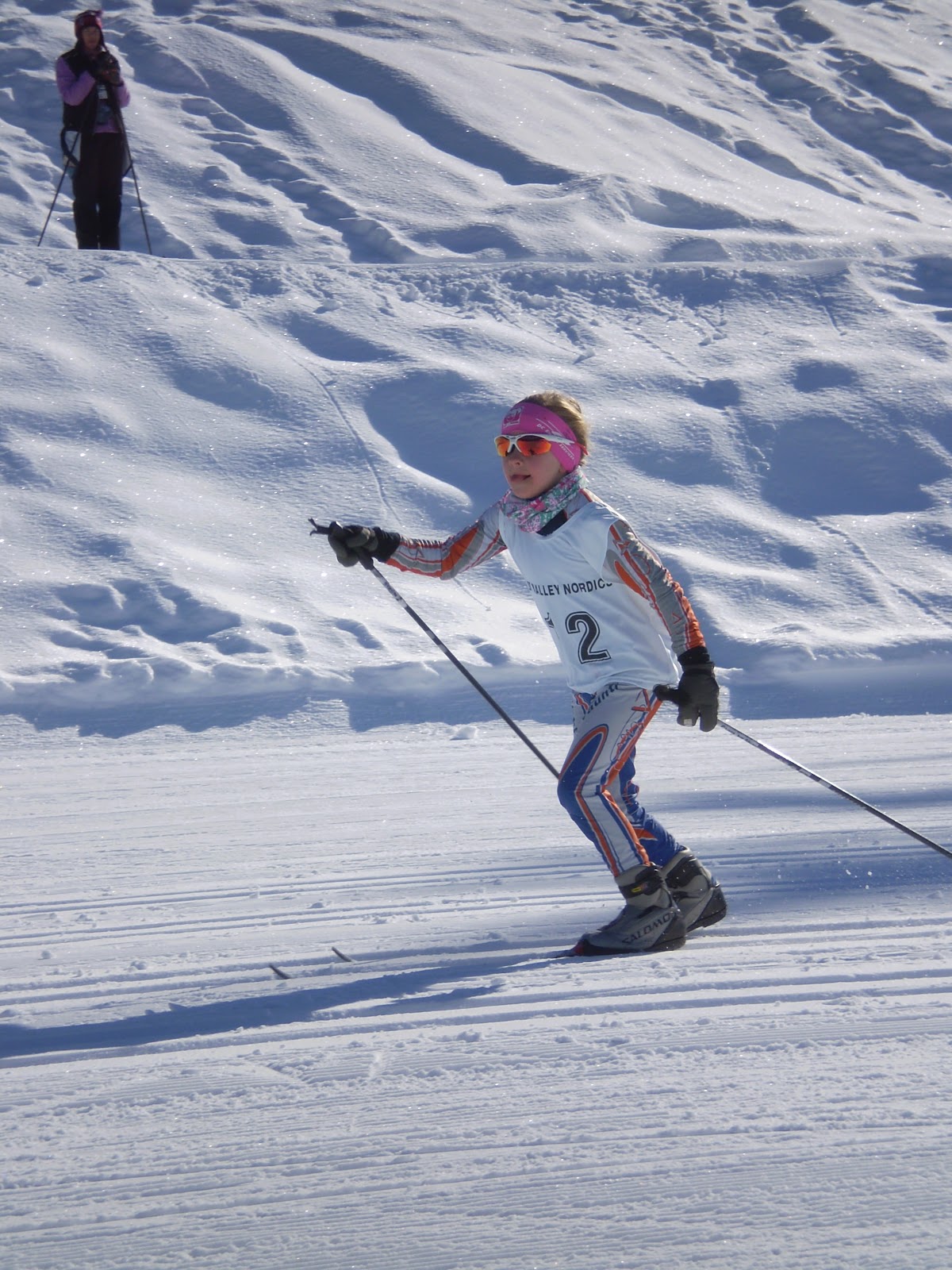
If you've been around awhile and worked with adolescents, you'll know what I am talking about - adolescent skiers competing in the same category who are at vastly different places in their growth and development. Sometimes 20-25 kilos difference in weight - a small 90 pound boy competing in the same group as a 150 lb boy-man. This happens all the time and yet despite intuitively knowing something is going on here that really isnt going to benefit anyone, we let it happen, over and over again. When it happens, the big boy wins, the little boy finishing somewhere after all of the big boys. This is life at 12 or 13 for adolescent boys who race cross country skiing in Canada.
A good friend of mine has proposed we give out some special awards to early developers - the 'wonder bra' award and the 'gillette' (making reference to shaving facial hair) award. I am not out to pick on anyone, but I do really believe that we are doing a disservice to young skiers when the best that we do is stick to chronological year of birth competition categories for kids going through peak height velocity. We do a disservice to the early developers and we do a disservice to the late developers. If you've been around awhile, you've seen it happen many times - early developer wins consistently at 12 or 13, late developers finally catch up at 16 or 17 (if they stick around that long) and start beating the early developer - early developers say to themselves - 'I'm not really that good at this after all' and drop out. In the mean time, the early developer has had access to additional specialized training and coaching opportunities made available through provincial athlete development recognition strategies such as a provincial development team. Tons of money is invested as a sport community in these early developers only to find that the ones who persist after high school as a racer are often not the athletes who had access as early developers to all of the specialized training and coaching opportunities, but instead its the late developers who persist. It doesn't always happen this way, but I've seen this happen many times.
Developing at your own pace is totally normal - its been happening for as long as humans have been on the earth - some kids due to genetics, and maybe environment, develop at an earlier rate, 11, 12 or 13 years old, some grow more at a statistically average rate 14-15, while others don't really get going on their adolescent growth spurt until later, sometimes as old as 16 or 17. This is what is normal. In our club in Canmore, we take the time to collect growth data - arm span, standing height, sitting height - every three months with all of our developing athletes 11-17. It is alot of work, and the information it provides is largely intuitive - 'Yup, Billy is in early peak height velocity' or 'Jenny is nearing the end of her adolescent growth spurt'. We do the work of measuring kids anyway. We've been at this every three months since early 2010. The information it provides validates the fact that early developers finish well ahead of late developers in almost all races. I haven't done the correlational calculations comparing rate of growth with race results, but you know its happening. I'd love to share our data with someone who has the time to do this kind of analysis at a university - maybe I'll do it at some point, I do have 'PhD' on my bucket list.
We have a pretty good idea of what is going on with our young athletes - and we can show kids growth curves and provide some information to kids about why so and so is winning and why they're not, or if they are an early developer, working with them to make sure that they understand, that they need to not over focus on results, develop resiliency, and realize that the results as a 13 year old will mean nothing when they are 18. We can give the late developers the same message - its just as important for them. Its important to us that all of our skiers stick it out, and strive to be their best. This work is led by our club's program director/head coach - a really incredible guy with a strong vision of what he wants our club to be and what it means to help kids be their best.
We have a pretty good idea of what is going on with our young athletes - and we can show kids growth curves and provide some information to kids about why so and so is winning and why they're not, or if they are an early developer, working with them to make sure that they understand, that they need to not over focus on results, develop resiliency, and realize that the results as a 13 year old will mean nothing when they are 18. We can give the late developers the same message - its just as important for them. Its important to us that all of our skiers stick it out, and strive to be their best. This work is led by our club's program director/head coach - a really incredible guy with a strong vision of what he wants our club to be and what it means to help kids be their best.
Please don't misunderstand what I am saying here - early developers who win cross country ski races deserve to do well, they often are kids who are very dedicated to physical training and technical skill development. The problem I see with our current competition model for 12-13 year olds is that we do nothing to recognize that peak height velocity has a huge impact on who wins on race day. There is a sort of 'maintain the status quo' attitude out there at all levels when it comes to adjusting competition categories to reflect developmental considerations. I hear it all the time when I have this conversation - 'kids need to learn how to suck it up' - 'kids need to be patient' - 'kids need to not over focus on results'. The fact is these are hard lessons for adolescents and maybe we could be doing something better to not set kids up for hard lessons.
I think we set boys up - both the early developers and late developers when we use chronological competition groupings for kids experiencing peak height velocity. I believe its why we have a huge drop off in athlete numbers just after the midget category. Its too bad really, as leaders in our sport, I think we can do something to allow kids at different developmental stages in early adolescence to compete with others of similar developmental level. Its not healthy to win too much as an early adolescent - in cross country ski racing young athletes need to develop experience of being in pursuit of someone who is faster than them - when they get to Eastern or Western Canadian Championships as a 14 or 15 year old, they are not going win every race and the athlete who does come out on top is often some of those athletes who have had to learn to struggle and fight for their success. I believe as well, that it's not healthy to lose too much as an early adolescent - every kid needs to be able to find some success - something that gives them some motivation to hang in there, to wait patiently, to give themselves a chance to grow.
Maybe I am wrong about all of this, and the important learning for all adolescents is resiliency, determination, perseverance, hard work and not results. These are all very important life lessons that being a racer can teach an adolescent. The problem I see is that many adolescents give up because they just can't see 5 years down the road - its too far away. Many adolescents aren't willing to take the risk of failing over and over again. I think we are failing many, many of our young skiers in sticking to chronological age categories for early adolescent skiers. We can do better than this, because at 12 or 13, size does matter - how big your body is makes a difference. When we look at who the top performers are at the highest level in Canada, many of those athletes were not the ones who were shaving at 13. What has happened to all of these early developers - why haven't they stuck it out? What can we do to make sure that we build a sport system that gives every kid the best chance of sticking it out for the long term.
This is a great conversation, and one I enjoy having. What can we be doing in Canada to help create the most robust sport system for cross country skiing? Let's grab a coffee next time we see each other and see where it goes.
Roy Strum
All Around Nice Guy
Canmore, AB
I think we set boys up - both the early developers and late developers when we use chronological competition groupings for kids experiencing peak height velocity. I believe its why we have a huge drop off in athlete numbers just after the midget category. Its too bad really, as leaders in our sport, I think we can do something to allow kids at different developmental stages in early adolescence to compete with others of similar developmental level. Its not healthy to win too much as an early adolescent - in cross country ski racing young athletes need to develop experience of being in pursuit of someone who is faster than them - when they get to Eastern or Western Canadian Championships as a 14 or 15 year old, they are not going win every race and the athlete who does come out on top is often some of those athletes who have had to learn to struggle and fight for their success. I believe as well, that it's not healthy to lose too much as an early adolescent - every kid needs to be able to find some success - something that gives them some motivation to hang in there, to wait patiently, to give themselves a chance to grow.
Maybe I am wrong about all of this, and the important learning for all adolescents is resiliency, determination, perseverance, hard work and not results. These are all very important life lessons that being a racer can teach an adolescent. The problem I see is that many adolescents give up because they just can't see 5 years down the road - its too far away. Many adolescents aren't willing to take the risk of failing over and over again. I think we are failing many, many of our young skiers in sticking to chronological age categories for early adolescent skiers. We can do better than this, because at 12 or 13, size does matter - how big your body is makes a difference. When we look at who the top performers are at the highest level in Canada, many of those athletes were not the ones who were shaving at 13. What has happened to all of these early developers - why haven't they stuck it out? What can we do to make sure that we build a sport system that gives every kid the best chance of sticking it out for the long term.
This is a great conversation, and one I enjoy having. What can we be doing in Canada to help create the most robust sport system for cross country skiing? Let's grab a coffee next time we see each other and see where it goes.
Roy Strum
All Around Nice Guy
Canmore, AB


